
Research
Arbovirus ecology, evolution, and epidemiology

Ecological drivers & barriers
The emergence and spread of arthropod-borne (arbo)viruses is determined by interactions between viruses, their arthropod vectors, vertebrate hosts, and the environment, both at the micro- and macro-scale. We are studying these complex interactions across different scales to understand the underlying drivers and barriers of arbovirus transmission. Recently, we found that the tick-borne Powassan virus is maintained in highly localized transmission foci in the northeastern United States (Vogels et al. 2023), which raised new hypotheses on the ecology of Powassan virus. Combining field- and lab-based approaches, we are currently further investigating the role of different modes of transmission that may explain the strong spatial focality of Powassan virus.
Evolution & control
New control strategies are needed to mitigate the impact of arboviruses on public health. One novel control strategy is the release of the main mosquito vector, Aedes aegypti, infected with the endosymbiotic bacterium Wolbachia. This strategy relies on the principle that infection with Wolbachia reduces the mosquito’s ability to transmit arboviruses, such as dengue virus. Using our unique collection of genetically diverse dengue virus stocks, Wolbachia-infected mosquito colonies, and innovative experimental approaches, we study the impact of dengue virus genetic diversity and evolution on the effectiveness of Wolbachia.


Emerging variants
Virus evolution has been key in outbreaks of several emerging (arbo)viruses. Determining the phenotypes associated with emerging virus genotypes is important to understand the impact of mutations on transmission, treatment, and control. We characterize virus genotypes through next-generation sequencing and determine the associated phenotypes using experimental assays in the laboratory. We used this approach to study the functional evolution of Zika virus during the epidemic in the Americas (Oliveira et al. 2023), and to study the impact of SARS-CoV-2 variants on vaccine-induced immunity (Lucas et al. 2021). We continue to study genotype x genotype x environment (G x G x E) interactions to understand how arboviruses may respond to new environments.
Assay development & validation
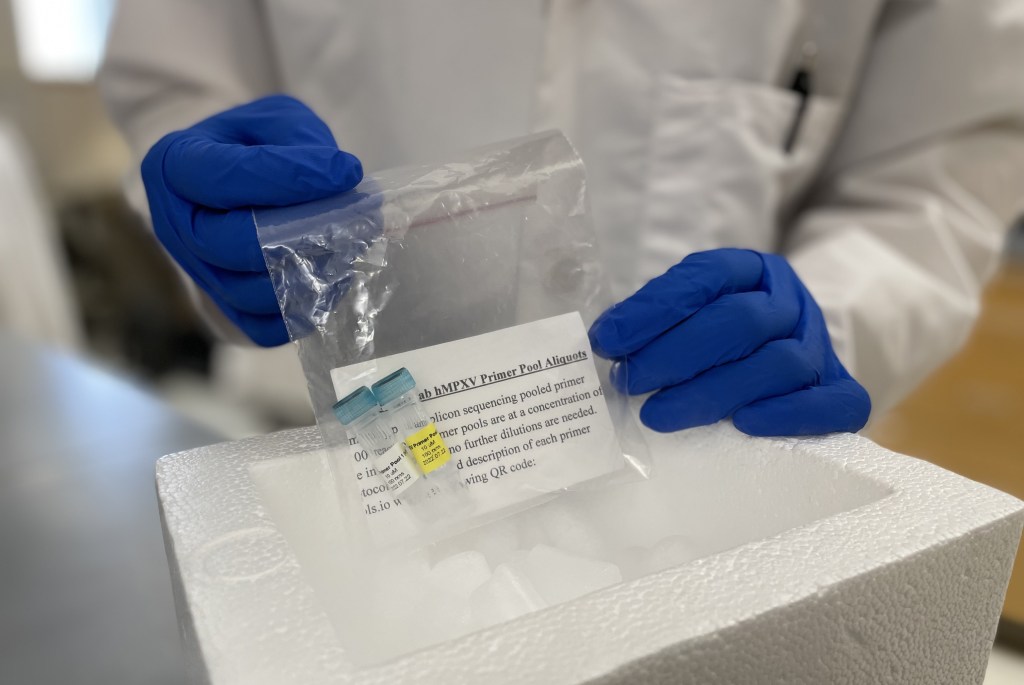
PCR provides a sensitive and cost-effective approach for both detection and whole genome sequencing of viruses. During the COVID-19 pandemic, our collaborative team developed SalivaDirect (Vogels et al. 2021), which received Emergency Use Authorization from the FDA. With the emergence of variants of concern, we established the Yale SARS-CoV-2 Genomic Surveillance Initiative through which >25,000 genomes have been sequenced. We continue to apply the lessons that we learned during the pandemic to adapt amplicon sequencing workflows to enhance sequencing capacity for other viruses such as human monkeypox virus (Chen et al. 2023) and dengue virus (Vogels et al. 2023).
 Vogels Lab